
Audio-Technica AT2020USB-XP vs Rode NT-USB Mini Comparison
Compare Audio-Technica AT2020USB-XP vs Rode NT-USB Mini side by side: specs, ratings, pros and cons, and which one fits your room best.
On this page
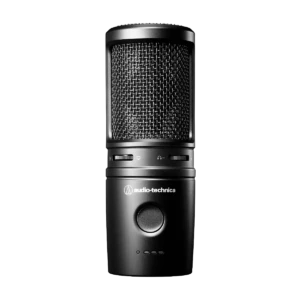
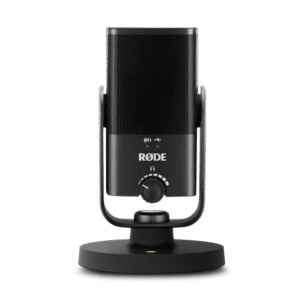
At a Glance
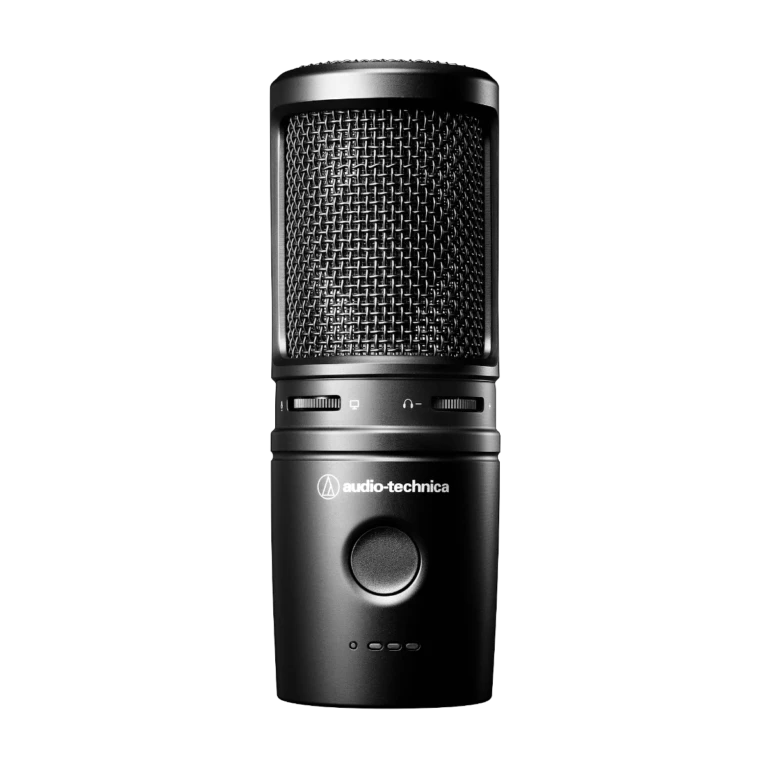
The Audio-Technica AT2020USB-XP is a cardioid condenser USB-C microphone based on the long-running AT2020, with 24-bit / 192 kHz conversion, AI noise reduction, a mute button and a headphone mix control.
- Best For
- Voiceover and calls from a quiet desk
- Microphone Type
- Condenser
- Launch Price
- $149
- Polar Pattern
- Cardioid
- Sample Rate
- 192 kHz
- Headphone Monitoring
- Yes (3.5 mm)
- Mute Button
- Yes
- Connection
- USB-C
The Rode NT-USB Mini is a compact cardioid condenser USB microphone with 24-bit / 48 kHz audio, a magnetic desk stand and zero-latency headphone monitoring, built for small desks and simple setups.
- Best For
- Small desks and first upgrades
- Microphone Type
- Condenser
- Launch Price
- $99
- Polar Pattern
- Cardioid
- Sample Rate
- 48 kHz
- Headphone Monitoring
- Yes (3.5 mm)
- Mute Button
- No
- Connection
- USB
Review Scores Compared
Expert Score
Capsule Quality & Fidelity
Interface Versatility & Patterns
On-Mic Hardware Controls
DSP Engine & Software
Mounting & Shock
Editorial Reviews Comparison
Capsule Quality & Fidelity
- Audio-Technica AT2020USB-XP8.9/10Leader
- Rode NT-USB Mini8.0/10
Audio-Technica AT2020USB-XP
The capsule is a cardioid condenser, and the converter runs at up to 24-bit / 192 kHz, far beyond what calls need. Audio-Technica rates the frequency response at 20 Hz to 20 kHz. Voices come through natural and slightly bright, with clean detail in consonants. Compared with the Rode NT-USB+ the tone is a touch leaner in the low mids, which helps clarity on laptop speakers but can sound thin on deep voices.
Rode NT-USB Mini
Rode specifies a cardioid condenser capsule recording at 24-bit / 48 kHz across 20 Hz to 20 kHz. Max SPL is 121 dB, which covers loud laughs and raised voices. The sound is clean and balanced, with a natural midrange that suits speech. It does not have the extra depth of the larger NT-USB+, but on a Zoom call few listeners would hear the difference.
Interface Versatility & Patterns
- Audio-Technica AT2020USB-XP7.7/10
- Rode NT-USB Mini7.7/10
Audio-Technica AT2020USB-XP
As a condenser, it hears more of the room than a dynamic mic, and the cardioid pattern rejects mainly from the rear. That makes placement more important than with Shure's dynamic models. The built-in AI noise reduction is the XP's answer. A button on the body toggles processing that removes steady background noise, such as fans and traffic, before the signal reaches your app.
Rode NT-USB Mini
The cardioid pattern rejects sound from behind, though as a condenser it still hears the room around it. Keyboard and mouse clicks show up if the mic sits right beside them. In a quiet bedroom office that is not a problem, and the clarity wins over a laptop mic immediately.
On-Mic Hardware Controls
- Audio-Technica AT2020USB-XP9.7/10Leader
- Rode NT-USB Mini7.1/10
Audio-Technica AT2020USB-XP
A mute button with a status light sits on the front, alongside a headphone volume knob and a mix control that balances your mic against computer audio. The mix knob is useful on calls, because you can hear yourself naturally without echo while still hearing the far end. Most rivals at this price only offer a fixed monitor level.
Rode NT-USB Mini
The only physical control is a knob for headphone volume, next to a 3.5 mm output with zero-latency monitoring. Rode left off both a mute switch and an input gain dial. For call users the missing mute is the main drawback. You will rely on Teams or Zoom shortcuts, which is fine at a desk but slower under pressure.
DSP Engine & Software
- Audio-Technica AT2020USB-XP10.0/10Leader
- Rode NT-USB Mini7.1/10
Audio-Technica AT2020USB-XP
The AT2020USB-XP does not list a named companion app. Onboard DSP is listed as Onboard noise reduction (3 levels) and automatic gain control. AI noise processing includes built-in AI noise reduction. The software or onboard controls also include monitoring (3.5 mm), gain control (switchable automatic gain control) and a mix control.
Rode NT-USB Mini
The NT-USB Mini uses Rode Connect, Rode Central for its companion software. The software or onboard controls also include monitoring (3.5 mm) and a noise gate (via RØDE Connect). Official capture is listed at 48 kHz and 24-bit. When I hook this up for a webinar, I check whether the processing lives on the mic or only in the app.
Mounting & Shock
- Audio-Technica AT2020USB-XP7.1/10Leader
- Rode NT-USB Mini5.3/10
Audio-Technica AT2020USB-XP
The body is metal, with a short tripod desk stand and a standard thread for boom arms. It feels sturdy and familiar if you have used any AT2020 variant. The included stand is functional but low. Most desks benefit from a boom arm, which lifts the mic to chin height and keeps it further from keyboard vibration.
Rode NT-USB Mini
The body is metal and compact, at about 165 g for the mic alone. A magnetic desk stand holds it securely and detaches with a twist, leaving a thread for boom arms. The magnetic stand is clever on a crowded desk. You can lift the mic off quickly to clear space, then click it back into place without retightening anything.
Why Audio-Technica AT2020USB-XP Beats Rode NT-USB Mini (and Vice Versa)
Why Audio-Technica AT2020USB-XP beats Rode NT-USB Mini
- Better dsp engine & software: 10.0 vs 7.1 out of 10
- Better on-mic hardware controls: 9.7 vs 7.1 out of 10
- Better mounting & shock: 7.1 vs 5.3 out of 10
- Better capsule quality & fidelity: 8.9 vs 8.0 out of 10
- Pop Filter / Windscreen: Yes (included) vs Internal pop filter
- Sample Rate: 192 kHz vs 48 kHz
Why Rode NT-USB Mini beats Audio-Technica AT2020USB-XP
- Weight: 165 g vs 375 g
Review-score leads of 0.5+ points out of 10 first, then specs where only one comes out ahead.
Full Specifications
General
| Audio-Technica AT2020USB-XP | Rode NT-USB Mini | |
|---|---|---|
| Best For | Voiceover and calls from a quiet desk | Small desks and first upgrades |
| Microphone Type | Condenser | Condenser |
| Release Year | 2023 Better | 2020 |
| Launch Price | $149 | $99 Better |
| Use Case | Voiceover, podcasts and video calls | Video calls, streaming and podcasts |
Design & Build
| Audio-Technica AT2020USB-XP | Rode NT-USB Mini | |
|---|---|---|
| Weight | 375 g | 165 g Better |
| Dimensions | 142 mm long, 52 mm maximum body diameter | 89 mm wide x 141 mm tall |
| Stand / Mount | Tripod desk stand included | Magnetic desk stand included |
| Mount Thread | Standard mic thread | Standard thread under stand |
| Materials | Metal body | Metal body |
| Colors | Black | Black |
| Shock Mount | — | Magnetic desk stand provides isolation from knocks and bumps |
| Pop Filter / Windscreen | Yes (included) Better | Internal pop filter |
| Boom Arm Compatible | Yes | Yes |
Audio
| Audio-Technica AT2020USB-XP | Rode NT-USB Mini | |
|---|---|---|
| Capsule Size | Fixed-charge back plate, permanently polarized condenser | — |
| Polar Pattern | Cardioid | Cardioid |
| Frequency Response | 20 Hz – 20 kHz | 20 Hz – 20 kHz |
| Sample Rate | 192 kHz Better | 48 kHz |
| Bit Depth | 24 bit | 24 bit |
| Max SPL | — | 121 dB |
| Number of Patterns | 1 | 1 |
| Transducer Type | Condenser | Condenser |
| Phantom Power | No (USB bus powered, 5 VDC) | — |
| AI Noise Reduction | Yes (built-in AI noise reduction) | — |
| Onboard DSP | Onboard noise reduction (3 levels) and automatic gain control | — |
| Noise Gate | — | Yes (via RØDE Connect) |
Controls & Monitoring
| Audio-Technica AT2020USB-XP | Rode NT-USB Mini | |
|---|---|---|
| Headphone Monitoring | Yes (3.5 mm) | Yes (3.5 mm) |
| Mute Button | Yes Better | No |
| Gain Control | Yes (switchable automatic gain control) | — |
| Mix Control | Yes | — |
| Lighting | Yes (status LED) | — |
| Headphone Volume | Yes | Yes |
| Touch Mute | Yes (soft-touch capacitive mute) | — |
| Zero-Latency Monitoring | Yes | Yes |
Connectivity
| Audio-Technica AT2020USB-XP | Rode NT-USB Mini | |
|---|---|---|
| Connection | USB-C | USB |
| Cable | USB-C to USB-C and USB-C to USB-A | — |
| Software / DSP | — | Rode Connect, Rode Central |
| USB Connector | USB-C | — |
| XLR Output | No | No |
| OS Compatibility | Windows, macOS | Windows, macOS, iPadOS, ChromeOS |
| Works With | — | Windows, macOS; RØDE Connect and RØDE Central |
| Multi-Mic Support | — | Yes (up to four in Rode Connect) |
In the Box
| Audio-Technica AT2020USB-XP | Rode NT-USB Mini | |
|---|---|---|
| In the Box | Microphone, tripod stand, USB-C to USB-C cable, USB-C to USB-A cable | NT-USB Mini, magnetic desk stand, USB cable |
| Warranty | Audio-Technica limited warranty | Rode limited warranty |
Identifiers
| Audio-Technica AT2020USB-XP | Rode NT-USB Mini | |
|---|---|---|
| Model Number | AT2020USB-XP | NT-USB Mini |
Takeaways
- Rode NT-USB Mini costs the least ($99), and Audio-Technica AT2020USB-XP the most ($149).
- Our pick: Audio-Technica AT2020USB-XP, with the highest spec-based rating (4.5/5).
- Choose Audio-Technica AT2020USB-XP for voiceover and calls from a quiet desk.
- Choose Rode NT-USB Mini for small desks and first upgrades.
Pros and Cons
Audio-Technica AT2020USB-XP
PROS
- Classic AT2020 capsule sound
- Up to 24-bit / 192 kHz
- Built-in AI noise reduction
- Mute and mix controls on the mic
CONS
- Condenser picks up room noise
- Tripod stand is basic
- No XLR output
Rode NT-USB Mini
PROS
- Clear, natural condenser sound
- Compact with a magnetic stand
- Zero-latency headphone output
- Rode Connect supports several mics
CONS
- No mute button
- Picks up room noise
- Short stand for tall monitors
Similar Comparisons
 Audio-Technica AT2020USB-XP8.8/10
 Elgato Wave:3 MK.28.2/10Audio-Technica AT2020USB-XP vs Elgato Wave:3 MK.2
- Audio-Technica AT2020USB-XP8.8/10
 Elgato Wave Neo8.2/10Audio-Technica AT2020USB-XP vs Elgato Wave Neo
- Audio-Technica AT2020USB-XP8.8/10
 Shure MV7+8.2/10Audio-Technica AT2020USB-XP vs Shure MV7+
- Audio-Technica AT2020USB-XP8.8/10
 Sennheiser Profile USB7.9/10Audio-Technica AT2020USB-XP vs Sennheiser Profile USB
Quick Verdict
- Audio-Technica AT2020USB-XP 8.8Best overallLeads in Capsule Quality & Fidelity, On-Mic Hardware Controls, DSP Engine & Software
- Rode NT-USB Mini 7.4No outright category lead