
Audio-Technica AT2020USB-XP vs Shure MV7i Comparison
Compare Audio-Technica AT2020USB-XP vs Shure MV7i side by side: specs, ratings, pros and cons, and which one fits your room best.
On this page
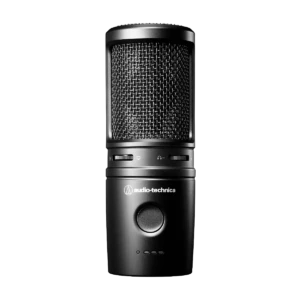
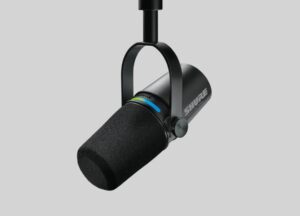
At a Glance
Recording voice and joining meetings from a quiet room with one USB-C mic? The Audio-Technica AT2020USB-XP is a cardioid condenser USB-C microphone based on the long-running AT2020, with 24-bit / 192 kHz conversion, AI noise reduction, a mute button and a headphone mix control.
- Best For
- Voiceover and calls from a quiet desk
- Microphone Type
- Condenser
- Launch Price
- $149
- Polar Pattern
- Cardioid
- Sample Rate
- 192 kHz
- Headphone Monitoring
- Yes (3.5 mm)
- Mute Button
- Yes
- Connection
- USB-C
Hosting a guest in the room or adding a second mic or guitar without extra hardware? Shure's MV7i combines a dynamic capsule and a built-in two-channel interface in one USB-C body. Its combo jack accepts XLR or 1/4 inch inputs with up to +60 dB gain and +48 V phantom power, and it records at 24-bit / 48 kHz with Real-Time Denoiser and Auto Level Mode.
- Best For
- Hosts who want a second mic or instrument input
- Microphone Type
- Dynamic USB with built-in interface
- Launch Price
- $349
- Polar Pattern
- Cardioid
- Sample Rate
- 48 kHz (44.1 kHz on iOS)
- Headphone Monitoring
- 3.5 mm headphone output
- Mute Button
- Yes (touch panel)
- Connection
- USB-C; combo XLR / 1/4 inch input
Review Scores Compared
Expert Score
Capsule Quality & Fidelity
Interface Versatility & Patterns
On-Mic Hardware Controls
DSP Engine & Software
Mounting & Shock
Editorial Reviews Comparison
Capsule Quality & Fidelity
- Audio-Technica AT2020USB-XP8.9/10Leader
- Shure MV7i8.5/10
Audio-Technica AT2020USB-XP
The capsule is a cardioid condenser, and the converter runs at up to 24-bit / 192 kHz, far beyond what calls need. Audio-Technica rates the frequency response at 20 Hz to 20 kHz. The Rode NT-USB+ is the closest USB condenser alternative. For voiceover work the high sample rate gives editing headroom.
Shure MV7i
The MV7i records at 24-bit / 48 kHz over USB-C, with 16-bit / 44.1 kHz on iOS. Its dynamic capsule is the same broadcast-style design Shure uses across the MV7 family. Auto Level Mode keeps you at a steady level if you lean back or get animated. The second channel records separately, so a guest on a condenser or a guitar can be balanced later.
Interface Versatility & Patterns
- Audio-Technica AT2020USB-XP7.7/10
- Shure MV7i9.2/10Leader
Audio-Technica AT2020USB-XP
As a condenser, it hears more of the room than a dynamic mic, and the cardioid pattern rejects mainly from the rear. That makes placement more important than with Shure's dynamic models. The built-in AI noise reduction is the XP's answer. A button on the body toggles processing that removes steady background noise, such as fans and traffic, before the signal reaches your app.
Shure MV7i
Cardioid pickup and a dynamic element keep the focus on the front of the mic. Shure's Real-Time Denoiser targets constant hums like a desk fan or HVAC vent. For the guest input, pickup depends on whatever mic you plug in, but the combo jack's 48 V phantom power means condenser models work without a separate box.
On-Mic Hardware Controls
- Audio-Technica AT2020USB-XP9.7/10
- Shure MV7i9.7/10
Audio-Technica AT2020USB-XP
A mute button with a status light sits on the front, alongside a headphone volume knob and a mix control that balances your mic against computer audio. The mix knob is useful on calls, because you can hear yourself naturally without echo while still hearing the far end. Most rivals at this price only offer a fixed monitor level.
Shure MV7i
A touch panel on top handles mute and level, and a 3.5 mm headphone output allows latency-free monitoring of both channels. Touch mute is silent and works regardless of the meeting app, which is ideal when you need to cough on a live call. The LEDs show your level, so you can spot clipping before it happens.
DSP Engine & Software
- Audio-Technica AT2020USB-XP10.0/10Leader
- Shure MV7i6.3/10
Audio-Technica AT2020USB-XP
The AT2020USB-XP does not list a named companion app. Onboard DSP is listed as Onboard noise reduction (3 levels) and automatic gain control. AI noise processing includes built-in AI noise reduction. The software or onboard controls also include monitoring (3.5 mm), gain control (switchable automatic gain control) and a mix control.
Shure MV7i
The MV7i uses Shure MOTIV Mix for its companion software. Onboard DSP is listed as Auto Level Mode, Real-Time Denoiser, presets. Noise processing is listed as Real-Time Denoiser. The software or onboard controls also include EQ or presets (tone slider via MOTIV Mix), monitoring (3.5 mm headphone output), gain control (Auto Level or manual; up to +60 dB on the combo input), a mix control (MOTIV Mix), a limiter and a noise gate (Auto-Level Mode with SmartGate).
Mounting & Shock
- Audio-Technica AT2020USB-XP7.1/10Leader
- Shure MV7i6.4/10
Audio-Technica AT2020USB-XP
The body is metal, with a short tripod desk stand and a standard thread for boom arms. The included stand is functional but low. Most desks benefit from a boom arm, which lifts the mic to chin height and keeps it further from keyboard vibration. There is no shock mount in the box.
Shure MV7i
Shure lists 567 g for the MV7i. The body keeps the MV7 shape, with a yoke that mounts on standard 5/8 inch threads and a combo jack added to the rear. Build quality is excellent, with a solid metal housing and a touch panel that sits flush with the body.
Why Audio-Technica AT2020USB-XP Beats Shure MV7i (and Vice Versa)
Why Audio-Technica AT2020USB-XP beats Shure MV7i
- Better dsp engine & software: 10.0 vs 6.3 out of 10
- Better mounting & shock: 7.1 vs 6.4 out of 10
- Weight: 375 g vs 567 g
- Stand / Mount: Tripod desk stand included vs Adjustable integrated yoke (5/8-27 thread)
- Pop Filter / Windscreen: Yes (included) vs Digital Popper Stopper (DSP)
- Frequency Response: 20 Hz – 20 kHz vs 50 Hz to 16,000 Hz
Why Shure MV7i beats Audio-Technica AT2020USB-XP
- Better interface versatility & patterns: 9.2 vs 7.7 out of 10
- Transducer Type: Dynamic vs Condenser
Review-score leads of 0.5+ points out of 10 first, then specs where only one comes out ahead.
Full Specifications
General
| Audio-Technica AT2020USB-XP | Shure MV7i | |
|---|---|---|
| Best For | Voiceover and calls from a quiet desk | Hosts who want a second mic or instrument input |
| Release Year | 2023 | 2025 Better |
| Launch Price | $149 Better | $349 |
| Use Case | Voiceover, podcasts and video calls | Podcasts, music streaming, webinars |
| Weight | 375 g Better | 567 g |
| Dimensions | 142 mm long, 52 mm maximum body diameter | 164 x 207 x 90 mm (mic and yoke at 90 degrees) |
| Colors | Black | — |
| In the Box | Microphone, tripod stand, USB-C to USB-C cable, USB-C to USB-A cable | — |
| Warranty | Audio-Technica limited warranty | — |
| Model Number | AT2020USB-XP | MV7i |
Capsule Quality & Fidelity
| Audio-Technica AT2020USB-XP8.9/10 Better | Shure MV7i8.5/10 | |
|---|---|---|
| Transducer Type | Condenser | Dynamic Better |
| Sample Rate | 192 kHz Better | 48 kHz (44.1 kHz on iOS) |
| Bit Depth | 24 bit | 24-bit (16-bit on iOS) |
| Frequency Response | 20 Hz – 20 kHz Better | 50 Hz to 16,000 Hz |
| Max SPL | — | 128 dB |
| Sensitivity | — | -33 dBV/Pa (USB-C) |
| Microphone Type | Condenser | Dynamic USB with built-in interface |
| Capsule Size | Fixed-charge back plate, permanently polarized condenser | Dynamic |
Interface Versatility & Patterns
| Audio-Technica AT2020USB-XP7.7/10 | Shure MV7i9.2/10 Better | |
|---|---|---|
| Connection | USB-C | USB-C; combo XLR / 1/4 inch input |
| XLR Output | No | Input only |
| Polar Pattern | Cardioid | Cardioid |
| Number of Patterns | 1 | 1 |
| USB Connector | USB-C | USB-C |
| Cable | USB-C to USB-C and USB-C to USB-A | 3 m USB-C to USB-C (included) |
| Phantom Power | No (USB bus powered, 5 VDC) | +48 V on the combo input |
| Phone / Tablet Support | — | Yes (iOS and Android via USB-C; not compatible with Lightning iOS devices) |
| Multi-Mic Support | — | Two channels (built-in capsule plus combo input) |
| OS Compatibility | Windows, macOS | Windows, macOS, iOS, Android |
On-Mic Hardware Controls
| Audio-Technica AT2020USB-XP9.7/10 | Shure MV7i9.7/10 | |
|---|---|---|
| Gain Control | Yes (switchable automatic gain control) | Auto Level or manual; up to +60 dB on the combo input |
| Zero-Latency Monitoring | Yes | Yes |
| Touch Mute | Yes (soft-touch capacitive mute) | Yes |
| Headphone Monitoring | Yes (3.5 mm) | 3.5 mm headphone output |
| Mix Control | Yes | Yes (MOTIV Mix) |
| Headphone Volume | Yes | — |
| Lighting | Yes (status LED) | LED level meter |
| Low-Cut Filter | — | Yes (high-pass filter) |
| Mute Button | Yes | Yes (touch panel) |
DSP Engine & Software
| Audio-Technica AT2020USB-XP10.0/10 Better | Shure MV7i6.3/10 | |
|---|---|---|
| Onboard DSP | Onboard noise reduction (3 levels) and automatic gain control Better | Auto Level Mode, Real-Time Denoiser, presets |
| Software / DSP | — | Shure MOTIV Mix |
| AI Noise Reduction | Yes (built-in AI noise reduction) | Real-Time Denoiser |
| Limiter / Clip Guard | — | Yes |
| Noise Gate | — | Yes (Auto-Level Mode with SmartGate) |
| Presets / EQ | — | Yes (tone slider via MOTIV Mix) |
Mounting & Shock
| Audio-Technica AT2020USB-XP7.1/10 Better | Shure MV7i6.4/10 | |
|---|---|---|
| Mount Thread | Standard mic thread | 5/8 inch |
| Stand / Mount | Tripod desk stand included Better | Adjustable integrated yoke (5/8-27 thread) |
| Pop Filter / Windscreen | Yes (included) Better | Digital Popper Stopper (DSP) |
| Boom Arm Compatible | Yes | Yes |
| Materials | Metal body | Metal |
Takeaways
- Audio-Technica AT2020USB-XP costs the least ($149), and Shure MV7i the most ($349).
- Our pick: Audio-Technica AT2020USB-XP, with the highest spec-based rating (4.4/5).
- Choose Audio-Technica AT2020USB-XP for voiceover and calls from a quiet desk.
- Choose Shure MV7i for hosts who want a second mic or instrument input.
Pros and Cons
Audio-Technica AT2020USB-XP
PROS
- Classic AT2020 capsule sound
- Up to 24-bit / 192 kHz
- Built-in AI noise reduction
- Mute and mix controls on the mic
CONS
- Condenser picks up room noise
- Tripod stand is basic
- No XLR output
Shure MV7i
PROS
- Second input for a guest mic or instrument
- Real-Time Denoiser and Auto Level Mode
- Touch-panel mute
- Phantom power for condenser guests
CONS
- USB-C only for its own capsule; no XLR out
- Expensive for a single mic
- Best features rely on the MOTIV Mix app
Similar Comparisons
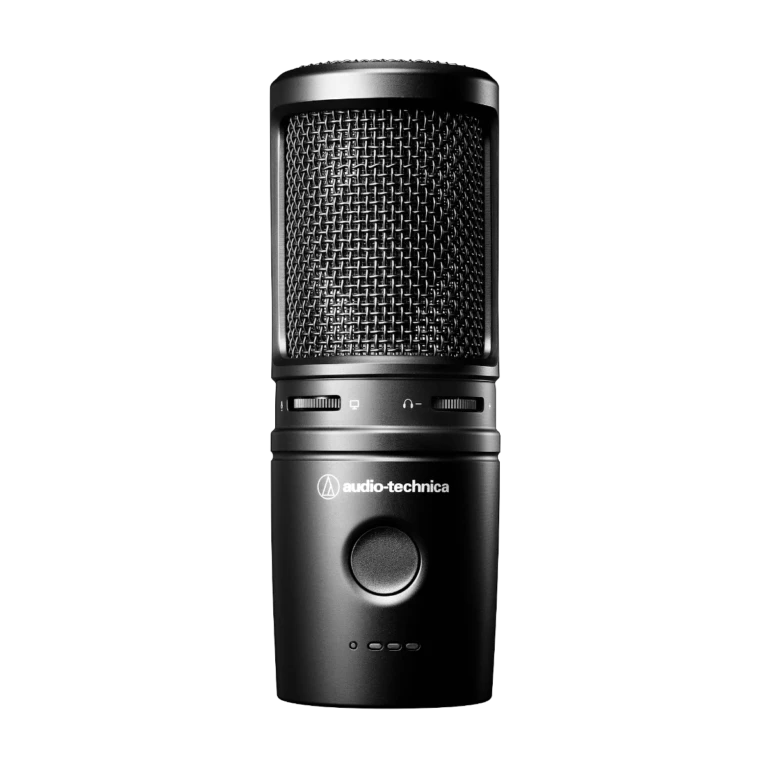 Audio-Technica AT2020USB-XP8.8/10
 Logitech G Yeti GX8.8/10Audio-Technica AT2020USB-XP vs Logitech G Yeti GX
- Audio-Technica AT2020USB-XP8.8/10
 Razer Seiren V3 Mini8.4/10Audio-Technica AT2020USB-XP vs Razer Seiren V3 Mini
- Audio-Technica AT2020USB-XP8.8/10
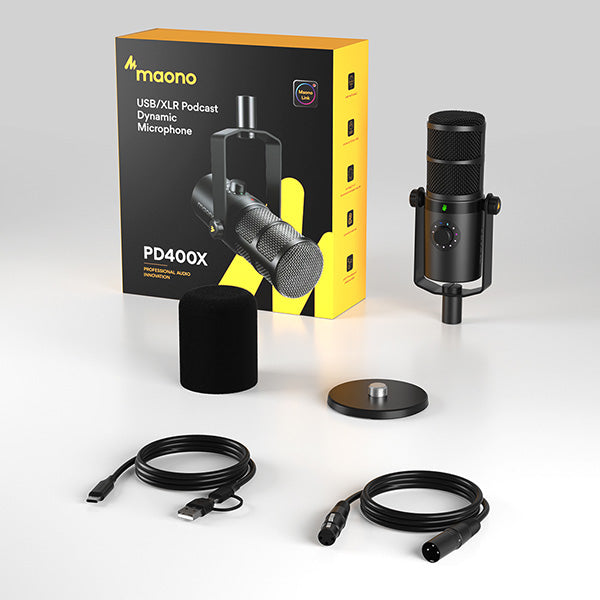 Maono PD400X8.3/10Audio-Technica AT2020USB-XP vs Maono PD400X
- Audio-Technica AT2020USB-XP8.8/10
 Rode PodMic USB8.3/10Audio-Technica AT2020USB-XP vs Rode PodMic USB
Quick Verdict
- Audio-Technica AT2020USB-XP 8.8Best overallLeads in Capsule Quality & Fidelity, DSP Engine & Software, Mounting & Shock
- Shure MV7i 8.3Leads in Interface Versatility & Patterns