
Poly Studio E60 vs Poly Studio X32 Comparison
Compare Poly Studio E60 vs Poly Studio X32 side by side: specs, ratings, pros and cons, and which one fits your room best.
On this page

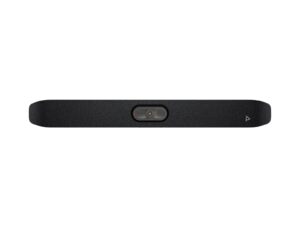

At a Glance
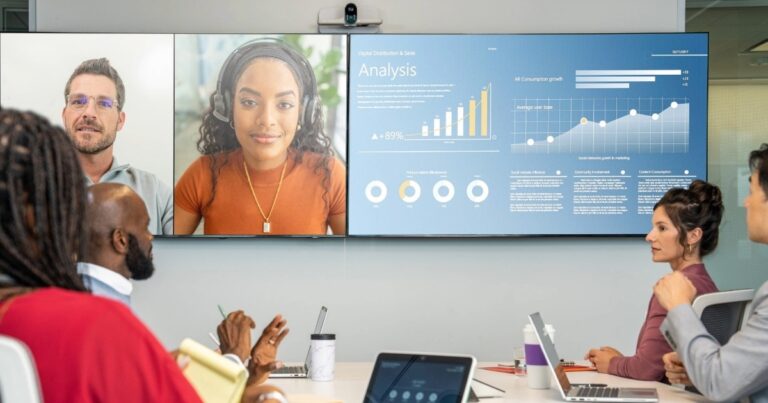
The Poly Studio E60 is a smart PTZ conference camera with two 8 MP sensors, 4K video at 30 fps, 12x optical zoom, DirectorAI framing, and a single-cable PoE+ installation option for medium and large rooms.
- Best For
- Medium to large meeting rooms
- Launch Price
- $2,150
- Resolution
- 4K
- Zoom
- 12x optical
- Field of View
- 107° (panoramic lens)
- Auto Framing
- DirectorAI group, speaker, presenter and people framing
- Camera
- 2 x 8 MP sensors
- Connection
- USB-B, RJ45
- Teams Rooms
- Microsoft Teams, Zoom, Google Meet
The Poly Studio X32 is a compact all-in-one bar for small rooms. It has a 4K 20 MP camera with a wide 132° view, 5x digital zoom and DirectorAI framing.
- Best For
- Small rooms
- Launch Price
- —
- Resolution
- 2160p 4K UHD (3840 x 2160), up to 30 fps
- Zoom
- 5x digital
- Field of View
- 132°
- Auto Framing
- Poly DirectorAI speaker, people and group framing; NoiseBlockAI; Acoustic Fence
- Camera
- 4K 20 MP single lens, fixed focus
- Connection
- USB-C, USB-A, HDMI in/out, Ethernet, PoE++, Wi-Fi, Bluetooth
- Teams Rooms
- Microsoft Teams, Zoom, Poly Video mode, USB device mode
Review Scores Compared
Expert Score
Optics & Room Coverage
AI Speaker Tracking & Framing
Room Audio Pickup & Output
OS Platform & Ecosystem
Deployment & I/O
Editorial Reviews Comparison
Optics & Room Coverage
- Poly Studio E608.5/10Leader
- Poly Studio X327.9/10
Poly Studio E60
Both lenses use 8 MP sensors, and the camera outputs 4K at 30 fps over USB or as an IP stream. The image is processed on board, so the room PC only receives the framed view. Faces look sharp at the back of a long boardroom, and skin tones stay natural under typical office LED panels.
Poly Studio X32
Poly fits a 20 MP 4K single lens with a 132° view and 5x digital zoom. DirectorAI handles speaker, people and group framing. However, as I swapped speakers around a compact table, DirectorAI settled on a new framing in a moment. The fixed-focus lens means no hunting in mixed light.
AI Speaker Tracking & Framing
- Poly Studio E609.4/10Leader
- Poly Studio X328.4/10
Poly Studio E60
The PTZ lens has 12x optical zoom and Poly rates speaker pickup to about 10 m. It covers a 71 degree horizontal field at its widest, while the panoramic lens sees 107 degrees. In practice, optical zoom keeps a presenter at the far end of a training room sharp, rather than the soft crop a fixed-lens bar produces.
Poly Studio X32
The Studio X32's official AI features include Poly DirectorAI speaker, people and group framing; NoiseBlockAI; Acoustic Fence. Zoom is listed as 5x digital. In rooms I've set up, I care whether tracking stays with the speaker without hunting around the table.
Room Audio Pickup & Output
- Poly Studio E60—
- Poly Studio X327.9/10
Poly Studio X32
Acoustic Fence ignores voices outside the meeting area, which helps in glass rooms next to busy corridors. I'd expect clean pickup across a typical medium table. NoiseBlockAI and Acoustic Fence help when a door opens mid-call. Four MEMS mics at about 4.57 m match the small-room brief; seat stragglers closer to the bar.
OS Platform & Ecosystem
- Poly Studio E6010.0/10Leader
- Poly Studio X329.4/10
Poly Studio E60
The camera is certified for Microsoft Teams Rooms, Zoom Rooms and Google Meet. Poly Lens handles firmware updates, settings and fleet monitoring. For IT teams, Lens lets you push framing modes and updates across many rooms from one console. That consistency matters more than any single feature once you manage dozens of spaces.
Poly Studio X32
It runs Teams and Zoom in appliance mode, Poly Video mode for SIP and H.323, and USB device mode for BYOD. Wireless sharing covers AirPlay and Miracast. For a Teams-first room, read our Teams vs. Teams Rooms guide before choosing the mode. Teams and Zoom appliance modes cover most new rooms; Poly Video mode keeps SIP/H.323 legacy endpoints in play during migrations.
Deployment & I/O
- Poly Studio E607.8/10
- Poly Studio X328.5/10Leader
Poly Studio E60
The E60 connects by USB-B to a room PC, or over RJ45 with PoE+ power and data on one cable. A 12 V DC input is available, and Poly includes a 5 m Ethernet cable and a wall mount. PoE+ means a single cable run from the switch, which installers appreciate on ceiling or wall mounts.
Poly Studio X32
Poly Lens handles management, and the box includes HDMI, Ethernet, a display clamp and a privacy cover. With a PoE++ switch already in the rack, I'd expect setup in a moment.
Why Poly Studio E60 Beats Poly Studio X32 (and Vice Versa)
Why Poly Studio E60 beats Poly Studio X32
- Better ai speaker tracking & framing: 9.4 vs 8.4 out of 10
- Better optics & room coverage: 8.5 vs 7.9 out of 10
- Better os platform & ecosystem: 10.0 vs 9.4 out of 10
- Ideal Room Size: Medium to large rooms vs Small rooms (about 15 x 10 ft)
- Zoom: 12x optical vs 5x digital
- Weight: 1.79 g vs 1.14 kg
Why Poly Studio X32 beats Poly Studio E60
- Better deployment & i/o: 8.5 vs 7.8 out of 10
- Camera Resolution: 2160p 4K UHD (3840 x 2160), up to 30 fps vs 4K
- Field of View: 132° vs 107° (panoramic lens)
- Megapixels: 20 MP vs 8 MP
- Horizontal FOV: 120° vs 71° (PTZ), 107° (panoramic)
- Camera: 4K 20 MP single lens, fixed focus vs 2 x 8 MP sensors
Review-score leads of 0.5+ points out of 10 first, then specs where only one comes out ahead.
Full Specifications
General
| Poly Studio E60 | Poly Studio X32 | |
|---|---|---|
| Best For | Medium to large meeting rooms | Small rooms |
| Ideal Room Size | Medium to large rooms Better | Small rooms (about 15 x 10 ft) |
| Release Year | 2024 | — |
| Launch Price | $2,150 | — |
Camera
| Poly Studio E60 | Poly Studio X32 | |
|---|---|---|
| Camera Resolution | 4K | 2160p 4K UHD (3840 x 2160), up to 30 fps Better |
| Max Frame Rate | 30 fps | 30 fps |
| Sensor | 2 x 8 MP sensors | — |
| Zoom | 12x optical Better | 5x digital |
| Optical Zoom | 12x | — |
| Field of View | 107° (panoramic lens) | 132° Better |
| Pan / Tilt | Yes | Digital (electronic framing) |
| Auto Framing | DirectorAI group, speaker, presenter and people framing | Poly DirectorAI speaker, people and group framing; NoiseBlockAI; Acoustic Fence |
| Speaker Tracking | Yes | — |
| Megapixels | 8 MP | 20 MP Better |
| Horizontal FOV | 71° (PTZ), 107° (panoramic) | 120° Better |
| Pan Range | ±170° | — |
| Tilt Range | ±30° | — |
| Focus | — | Fixed focus |
| Camera | 2 x 8 MP sensors | 4K 20 MP single lens, fixed focus Better |
| AI Features | — | Poly DirectorAI speaker, people and group framing; NoiseBlockAI; Acoustic Fence |
| Cameras | — | 1 |
Connectivity
| Poly Studio E60 | Poly Studio X32 | |
|---|---|---|
| Connection | USB-B, RJ45 | USB-C, USB-A, HDMI in/out, Ethernet, PoE++, Wi-Fi, Bluetooth |
| Power over Ethernet | Yes (PoE+) | PoE++ (IEEE 802.3bt class 6), 42.5-57 V |
| USB | USB-B | 1 x USB-C 5 Gbps, 2 x USB-A 5 Gbps |
| HDMI | — | 1 in (1.4, video+audio), 2 out (2.0) |
| IP Streaming | Yes | — |
| Network | RJ45 Ethernet | 10/100/1000 Ethernet (PoE++ class 6) |
| Wireless | — | Wi-Fi 6 (802.11ax) and Bluetooth 5.0 |
| Displays Supported | — | 2 |
| Ports | — | RJ-45 with PoE++ power |
| Content Sharing | — | HDMI input, Apple AirPlay, Miracast, digital whiteboarding |
| HDMI In | — | 1 x HDMI 1.4 (video + audio) |
| HDMI Out | — | 2 x HDMI 2.0 |
| Ethernet | — | 1 x RJ-45 10/100/1000 (PoE++) |
| Wi-Fi | — | Wi-Fi 6 (802.11ax) MIMO |
| Bluetooth | — | Bluetooth 5.0 |
| USB Host Ports | — | 2 x USB-A 5 Gbps |
Platforms
| Poly Studio E60 | Poly Studio X32 | |
|---|---|---|
| Certifications | Microsoft Teams, Zoom, Google Meet | Microsoft Teams, Zoom |
| Remote Management | Poly Lens | Poly Lens |
| Microsoft Teams | Yes | — |
| Zoom | Yes | — |
| Software | Poly Lens | — |
| Teams Rooms | Microsoft Teams, Zoom, Google Meet | Microsoft Teams, Zoom, Poly Video mode, USB device mode |
| Operating System | — | Poly Video OS |
| USB / BYOD Mode | — | Yes (USB Device mode) |
| Zoom Rooms | — | Certified |
| Google Meet | — | Certified |
| SIP / H.323 | — | Yes (H.323 / SIP up to 6 Mbps in Poly Video mode) |
| Appliance Mode | — | Yes |
Design
| Poly Studio E60 | Poly Studio X32 | |
|---|---|---|
| Mounting | Shelf, wall mount (included) | Display mounting clamp included |
| Weight | 1.79 g Better | 1.14 kg |
| Privacy Cover | — | Attachable privacy cover (included) |
| Dimensions | 20 x 15 x 16.5 cm | 576.8 x 66.1 x 74.8 mm |
| Power | PoE+ or 12 V DC | PoE++ (IEEE 802.3bt class 6) injector or switch; optional 65 W PoE++ adapter |
| Colors | — | Black |
| Operating Temperature | — | 0 to 40 °C |
In the Box
| Poly Studio E60 | Poly Studio X32 | |
|---|---|---|
| In the Box | Camera, 5 m Ethernet cable, wall mount | Studio X32, HDMI cable, Ethernet cable, display clamp, privacy cover |
| Warranty | 1-year limited | Poly standard 1-year limited |
Identifiers
| Poly Studio E60 | Poly Studio X32 | |
|---|---|---|
| Model Number | Studio E60 | A3SV5AA (no power supply) |
Audio
| Poly Studio E60 | Poly Studio X32 | |
|---|---|---|
| Built-in Mics | Two-element beamforming array | 4 |
| Mic Pickup Range | — | 4.57 m |
| Speakers | — | Dual speakers, 2 x 5 W, 100 Hz-20 kHz, 77 dB (1 W/1 m) |
| Audio Processing | — | NoiseBlockAI, Acoustic Fence, AGC |
| Mic Array | — | 4 MEMS mics |
| Speaker Output | — | 2 x 5 W |
| Speaker Frequency Range | — | 100 Hz - 20 kHz |
| AI Noise Suppression | — | Yes (NoiseBlockAI) |
| Audio Fence / Zones | — | Acoustic Fence |
Design & Setup
| Poly Studio E60 | Poly Studio X32 | |
|---|---|---|
| Security | — | AES-128/256, H.235.6, security profiles |
| Security Slot | — | Yes |
| Cooling | — | 55 BTU/h heat dissipation |
Takeaways
- Our pick: Poly Studio E60, with the highest spec-based rating (4.5/5).
- Choose Poly Studio E60 for medium to large meeting rooms.
- Choose Poly Studio X32 for small rooms.
Pros and Cons
Poly Studio E60
PROS
- Dual sensors for wide and zoomed views
- 12x optical zoom with 10 m pickup range
- PoE+ single-cable install
- Teams, Zoom and Meet certified
CONS
- Pricey for small rooms
- Needs a separate audio system
- Heavy at 1.79 kg
Poly Studio X32
PROS
- 132° field of view
- PoE++ power and network on one cable
- AirPlay and Miracast sharing
- Light at 1.14 kg
CONS
- 2 x 5 W speakers
- Teams and Zoom only (no Google Meet listed)
Similar Comparisons
 Poly Studio E609.0/10
 Yealink UVC869.4/10Poly Studio E60 vs Yealink UVC86
- Poly Studio E609.0/10
 Yealink MeetingBar A409.2/10Poly Studio E60 vs Yealink MeetingBar A40
- Poly Studio E609.0/10
 Poly Studio X509.0/10Poly Studio E60 vs Poly Studio X50
- Poly Studio E609.0/10
 AVer CAM520 Pro38.9/10Poly Studio E60 vs AVer CAM520 Pro3
Quick Verdict
- Poly Studio E60 9.0Best overallLeads in Optics & Room Coverage, AI Speaker Tracking & Framing, OS Platform & Ecosystem
- Poly Studio X32 8.3Leads in Deployment & I/O