At a glance
| Microphone Type | Dynamic USB/XLR |
|---|---|
| Polar Pattern | Cardioid |
| Sample Rate | 48 kHz |
| Headphone Monitoring | 3.5 mm headphone output |
| Mute Button | No |
| Connection | USB-C, XLR |
- Model PodMic USB
- Released 2022
RodeLast updated on November 2026
Rode PodMic USB Review
Prices, shipping and returns are handled by the retailer.
On this page
Overview
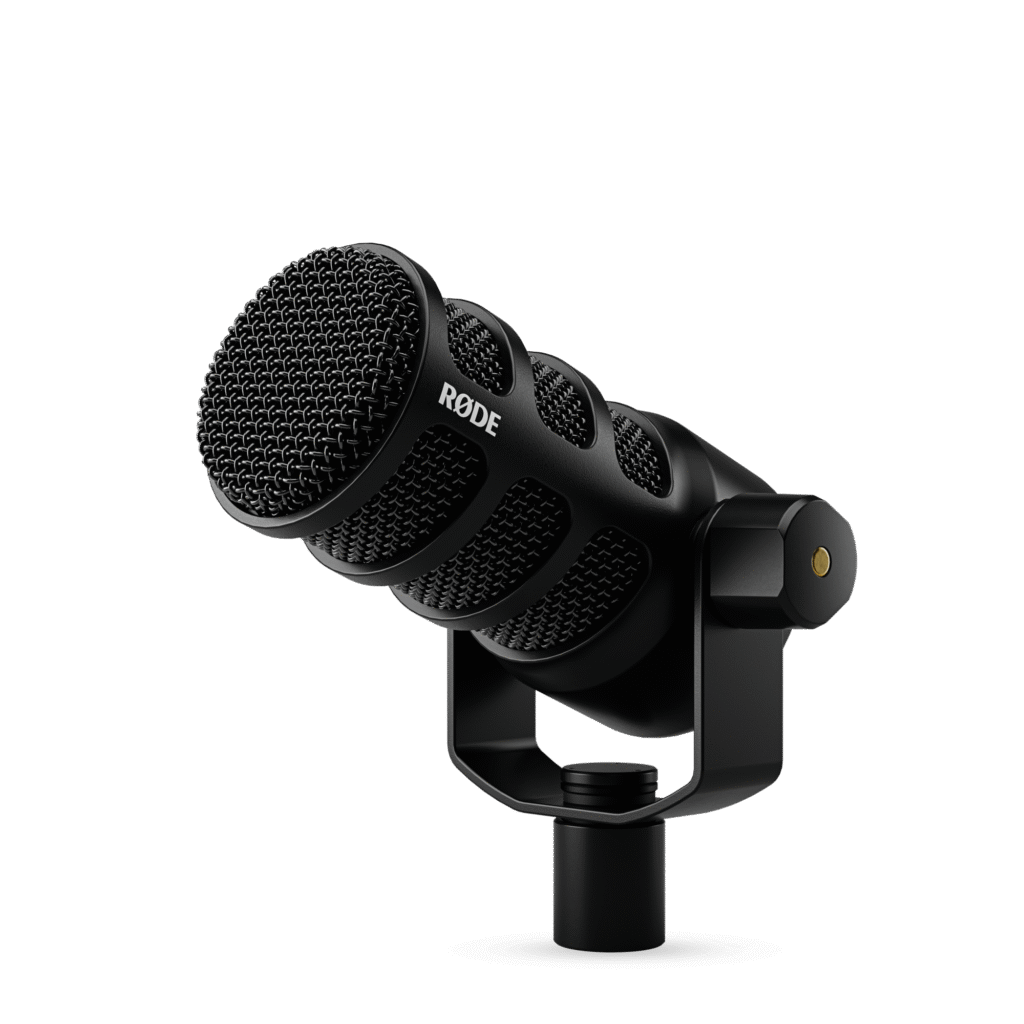
Is voice central to your work, and do you have a solid arm to hold a heavy mic? The Rode PodMic USB is a dynamic broadcast microphone with USB-C and XLR outputs, 24-bit / 48 kHz conversion, Rode's Revolution Preamp, APHEX processing and an internal pop filter and shock mount.
- Rich broadcast sound
- USB-C and XLR outputs
- APHEX processing via Rode software
- Internal pop filter and shock mount
Key Takeaways
- Revolution Preamp with high gain
- Compressor, noise gate and APHEX effects
- Zero-latency headphone output
Best For
- Podcasters
- Webinar hosts
- Voice-over
Avoid If
- You want a light desk mic
- You need on-mic mute
Pros & Cons
PROS
- Rich broadcast sound
- USB-C and XLR outputs
- APHEX processing via Rode software
- Internal pop filter and shock mount
CONS
- Heavy at 900 g
- Needs a sturdy boom arm
- No mute button on the body
Review Scores
Score Breakdown
8.3/10 Expert Score
- Capsule Quality & Fidelity8.6/10
- Interface Versatility & Patterns9.8/10
- On-Mic Hardware Controls8.0/10
- DSP Engine & Software5.4/10
- Mounting & Shock8.9/10
How this score is calculated
Each criterion is the weighted average of its available spec scores (0–10), calculated from official specifications using our Microphones scoring matrix. Empty specs are skipped, not scored as 0. The Expert Score is the weighted average of the scored criteria, shown out of 10; stars = Expert Score ÷ 2 (a 9.4/10 score is 4.7 stars), to one decimal.
| Criterion | Weight | From specs | Score |
|---|---|---|---|
| Capsule Quality & FidelityTransducer Type: Dynamic → 9.0; Sample Rate: 48 kHz → 7.5; Bit Depth: 24-bit → 9.5; Frequency Response: 20 Hz to 20 kHz → 8.0 | 40% | 8.7 | 8.6 |
| Interface Versatility & PatternsConnection: USB-C, XLR → 10.0; XLR Output: Yes → 10.0; Polar Pattern: Cardioid → 9.0 | 20% | 9.8 | 9.8 |
| On-Mic Hardware ControlsGain Control: Software → 10.0; Zero-Latency Monitoring: Yes → 10.0; Touch Mute: No → 3.0; Headphone Monitoring: 3.5 mm headphone output → 8.0 | 15% | 8.0 | 8.0 |
| DSP Engine & SoftwareOnboard DSP: APHEX Aural Exciter → 4.0; Software / DSP: Rode Central, Rode Connect, UNIFY → 6.0; Noise Gate: Yes (via on-board APHEX DSP) → 10.0 | 15% | 5.4 | 5.4 |
| Mounting & ShockShock Mount: Yes (internal) → 10.0; Stand / Mount: Integrated swing mount → 6.0; Pop Filter / Windscreen: Yes (internal) → 10.0 | 10% | 8.9 | 8.9 |
| Expert Score | 8.3/10 | ||
Rode PodMic USB Review
Rode’s original PodMic, released in 2019, was an XLR-only dynamic aimed at podcast studios. The USB version followed in 2022 with built-in conversion and Rode’s Revolution Preamp.
Capsule Quality & Fidelity 8.6/10
Rode quotes a 20 Hz to 20 kHz frequency range with 24-bit / 48 kHz USB conversion. The Revolution Preamp provides clean, high gain, so the mic does not need an external booster.
Through Rode Central, Rode adds APHEX processing, including Aural Exciter and Big Bottom, for clarity and depth.
Compared with the Shure MV7+ the PodMic USB sounds fuller in the low mids, while the Shure is slightly brighter and more compact.
- Element Dynamic
- Sample Rate 48 kHz
- Bit Depth 24-bit
Interface Versatility & Patterns 9.8/10
The cardioid dynamic capsule works best within about 5 to 10 cm of the mouth. Sound from the sides and rear drops off quickly.
That makes it a strong choice for untreated rooms, where condenser mics would pick up echo and noise. A noise gate in Rode’s software adds further control between sentences.
Staying close and on axis matters, so pair it with a boom arm that brings the mic directly to your mouth without blocking your face on camera.
USB-C connects to Windows, macOS, iOS and Android, and the XLR output feeds mixers and interfaces. Both can be used at the same time with some setups.
The XLR path bypasses the internal preamp, so you can upgrade to a studio interface later. That makes it a long-term investment rather than a USB-only mic.
Rode’s software ecosystem adds multi-mic recording and processing, which suits podcasters who want to grow their setup over time. Mobile recording on a phone is possible with a USB-C cable, which suits interviews away from the desk.
- Connect USB-C, XLR
- XLR Yes
- Pattern Cardioid
On-Mic Hardware Controls 8.0/10
The body has a headphone volume dial and a 3.5 mm output for zero-latency monitoring. There is no gain knob or mute button on the mic.
Gain, compression and effects are set in Rode Central, Rode Connect or UNIFY. Without hardware mute, you rely on the meeting app or software for muting.
Once configured, settings are stored, so the mic sounds the same across apps. The lack of a physical mute is the main drawback for meeting use.
- Gain Software
- Zero Lat. Yes
- Monitor 3.5 mm headphone output
DSP Engine & Software 5.4/10
The PodMic USB uses Rode Central, Rode Connect, UNIFY for its companion software. Onboard DSP is listed as APHEX Aural Exciter, Big Bottom, compressor, noise gate.
The software or onboard controls also include monitoring (3.5 mm headphone output), gain control (Software) and a noise gate (via on-board APHEX DSP). Official capture is listed at 48 kHz and 24-bit. Hardware processing includes a low-cut filter (high-pass filter via on-board DSP).
- Gate Yes (via on-board APHEX DSP)
Mounting & Shock 8.9/10
The mic weighs 900 g, with an all-metal body, internal pop filter and internal shock mount. A swivel mount attaches to boom arms and stands.
The weight means light arms will sag, so a heavy-duty option such as the Rode PSA1 is a better match.
The swivel mount can be tightened firmly so the heavy body stays aimed.
- Shock Mount Yes (internal)
- Stand Integrated swing mount
Full Specifications
General
| Best For | Podcasters and voice-heavy meeting hosts |
|---|---|
| Release Year | 2022 |
| Launch Price | $199 |
| Use Case | Podcasts, webinars, voice-over |
| Weight | 900 g |
| Colors | Black, White |
| In the Box | Microphone, studio-quality external pop filter |
| Warranty | 5 years |
| Model Number | PodMic USB |
Capsule Quality & Fidelity 8.6/10
| Transducer Type | Dynamic |
|---|---|
| Sample Rate | 48 kHz |
| Bit Depth | 24-bit |
| Frequency Response | 20 Hz to 20 kHz |
| Microphone Type | Dynamic USB/XLR |
| Capsule Size | Dynamic |
Interface Versatility & Patterns 9.8/10
| Connection | USB-C, XLR |
|---|---|
| XLR Output | Yes |
| Polar Pattern | Cardioid |
| USB Connector | USB-C |
| Phone / Tablet Support | Yes (iOS and Android) |
| OS Compatibility | Windows, macOS, iOS, Android |
On-Mic Hardware Controls 8.0/10
| Gain Control | Software |
|---|---|
| Zero-Latency Monitoring | Yes |
| Headphone Monitoring | 3.5 mm headphone output |
| Headphone Volume | Yes |
| Low-Cut Filter | Yes (high-pass filter via on-board DSP) |
| Mute Button | No |
DSP Engine & Software 5.4/10
| Onboard DSP | APHEX Aural Exciter, Big Bottom, compressor, noise gate |
|---|---|
| Software / DSP | Rode Central, Rode Connect, UNIFY |
| Noise Gate | Yes (via on-board APHEX DSP) |
Mounting & Shock 8.9/10
| Shock Mount | Yes (internal) |
|---|---|
| Stand / Mount | Integrated swing mount |
| Pop Filter / Windscreen | Yes (internal) |
| Materials | Metal |
Product Details
| Brand | Rode |
|---|---|
| Model | PodMic USB |
| Model number | PodMic USB |
| Release year | 2022 |
Price Comparison
| Store | Price | Deal |
|---|---|---|
| Rode.comOfficial Rode store | Launch price $199 | View deal (opens in a new tab) |
The Verdict
Buy the Rode PodMic USB if voice is central to your work and you have a solid arm to hold it.
Skip it if you want a light desk mic. If you want hardware mute and a lighter body, the Shure MV7+ is easier on a desk.
Everything here is taken from Rode’s official product page and specifications. How the specs turn into the Expert Score is explained on How We Score.
FAQs
Does the PodMic USB have XLR?
Yes, it has both USB-C and XLR outputs.
What sample rate does it use?
24-bit / 48 kHz over USB.
How heavy is it?
900 g.
Does it have a mute button?
No.
What processing does it include?
APHEX effects, a compressor and a noise gate via Rode software.
Is a pop filter included?
Yes, it is built in.
What boom arm do I need?
A sturdy arm that supports 900 g or more.
Can I monitor myself?
Yes, through the zero-latency headphone output.