
Apogee HypeMiC vs Audio-Technica AT2020USB-XP Comparison
Compare Apogee HypeMiC vs Audio-Technica AT2020USB-XP side by side: specs, ratings, pros and cons, and which one fits your room best.
On this page
At a Glance
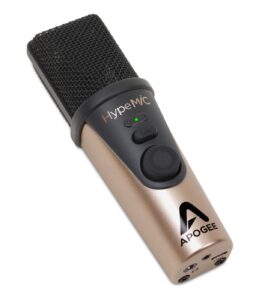
Recording podcasts or auditions on the move from a phone or laptop? The Apogee HypeMiC is a cardioid condenser USB microphone with a built-in analogue compressor offering three presets, 24-bit / 96 kHz conversion, 130 dB maximum SPL, a headphone output with Blend control and cables for USB-C, USB-A and Lightning.
- Best For
- Travelling voice actors and mobile podcasters
- Microphone Type
- Condenser USB
- Launch Price
- $349
- Polar Pattern
- Cardioid
- Sample Rate
- Up to 96 kHz
- Headphone Monitoring
- Headphone output with Blend
- Mute Button
- No
- Connection
- Micro-USB
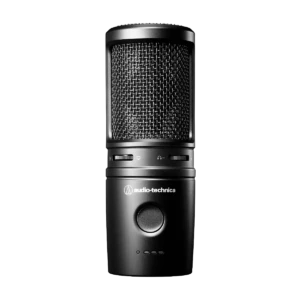
Recording voice and joining meetings from a quiet room with one USB-C mic? The Audio-Technica AT2020USB-XP is a cardioid condenser USB-C microphone based on the long-running AT2020, with 24-bit / 192 kHz conversion, AI noise reduction, a mute button and a headphone mix control.
- Best For
- Voiceover and calls from a quiet desk
- Microphone Type
- Condenser
- Launch Price
- $149
- Polar Pattern
- Cardioid
- Sample Rate
- 192 kHz
- Headphone Monitoring
- Yes (3.5 mm)
- Mute Button
- Yes
- Connection
- USB-C
Review Scores Compared
Expert Score
Capsule Quality & Fidelity
Interface Versatility & Patterns
On-Mic Hardware Controls
DSP Engine & Software
Mounting & Shock
Editorial Reviews Comparison
Capsule Quality & Fidelity
- Apogee HypeMiC8.8/10
- Audio-Technica AT2020USB-XP8.9/10Leader
Apogee HypeMiC
Apogee lists 24-bit / 96 kHz conversion, a maximum SPL of 130 dB, -36 dBFS sensitivity and up to 46 dB of preamp gain. The cardioid condenser capsule is tuned for voice and acoustic instruments. Voices sound clean, close and detailed, with a finished quality that usually needs processing afterwards.
Audio-Technica AT2020USB-XP
The capsule is a cardioid condenser, and the converter runs at up to 24-bit / 192 kHz, far beyond what calls need. Audio-Technica rates the frequency response at 20 Hz to 20 kHz. The Rode NT-USB+ is the closest USB condenser alternative. For voiceover work the high sample rate gives editing headroom.
Interface Versatility & Patterns
- Apogee HypeMiC7.7/10
- Audio-Technica AT2020USB-XP7.7/10
Apogee HypeMiC
The cardioid capsule captures mainly from the front of the mic. As a condenser, it still hears room reflections and distant noise more than a dynamic. In a bare office or near traffic, background sound becomes noticeable on calls. The compressor raises quiet passages, which can also lift room tone between sentences, so lighter settings suit meetings better than the heaviest preset.
Audio-Technica AT2020USB-XP
As a condenser, it hears more of the room than a dynamic mic, and the cardioid pattern rejects mainly from the rear. That makes placement more important than with Shure's dynamic models. The built-in AI noise reduction is the XP's answer. A button on the body toggles processing that removes steady background noise, such as fans and traffic, before the signal reaches your app.
On-Mic Hardware Controls
- Apogee HypeMiC8.0/10
- Audio-Technica AT2020USB-XP9.7/10Leader
Apogee HypeMiC
A dial on the front sets gain or headphone level, and a soft key cycles three Blend positions between direct mic signal and computer playback. A separate button cycles the three compressor presets. Blend lets you hear yourself with no delay while also hearing a director or remote guest, a practical feature for voice actors recording live sessions.
Audio-Technica AT2020USB-XP
A mute button with a status light sits on the front, alongside a headphone volume knob and a mix control that balances your mic against computer audio. The mix knob is useful on calls, because you can hear yourself naturally without echo while still hearing the far end. Most rivals at this price only offer a fixed monitor level.
DSP Engine & Software
- Apogee HypeMiC7.4/10
- Audio-Technica AT2020USB-XP10.0/10Leader
Apogee HypeMiC
The HypeMiC uses MetaRecorder (optional; also works with any audio app) for its companion software. Onboard DSP is listed as Analogue compressor with three presets. The software or onboard controls also include EQ or presets (3 analog compressor settings), monitoring (Headphone output with Blend), gain control (dial, up to 46 dB) and a mix control (Blend, three positions).
Audio-Technica AT2020USB-XP
The AT2020USB-XP does not list a named companion app. Onboard DSP is listed as Onboard noise reduction (3 levels) and automatic gain control. AI noise processing includes built-in AI noise reduction. The software or onboard controls also include monitoring (3.5 mm), gain control (switchable automatic gain control) and a mix control.
Mounting & Shock
- Apogee HypeMiC10.0/10Leader
- Audio-Technica AT2020USB-XP7.1/10
Apogee HypeMiC
HypeMiC measures 124 x 38 x 38 mm and weighs 200 g. It ships with a desktop tripod, a mic stand adapter, a pop filter and a carry case. The metal body and included case make it easy to carry in a laptop bag. The small tripod puts it at desk height, though not quite at mouth level when you sit upright.
Audio-Technica AT2020USB-XP
The body is metal, with a short tripod desk stand and a standard thread for boom arms. The included stand is functional but low. Most desks benefit from a boom arm, which lifts the mic to chin height and keeps it further from keyboard vibration. There is no shock mount in the box.
Why Apogee HypeMiC Beats Audio-Technica AT2020USB-XP (and Vice Versa)
Why Apogee HypeMiC beats Audio-Technica AT2020USB-XP
- Better mounting & shock: 10.0 vs 7.1 out of 10
- Weight: 200 g vs 375 g
Why Audio-Technica AT2020USB-XP beats Apogee HypeMiC
- Better dsp engine & software: 10.0 vs 7.4 out of 10
- Better on-mic hardware controls: 9.7 vs 8.0 out of 10
- Sample Rate: 192 kHz vs Up to 96 kHz
- Onboard DSP: Onboard noise reduction (3 levels) and automatic gain contro… vs Analogue compressor with three presets
- Mute Button: Yes vs No
Review-score leads of 0.5+ points out of 10 first, then specs where only one comes out ahead.
Full Specifications
General
| Apogee HypeMiC | Audio-Technica AT2020USB-XP | |
|---|---|---|
| Best For | Travelling voice actors and mobile podcasters | Voiceover and calls from a quiet desk |
| Release Year | 2019 | 2023 Better |
| Launch Price | $349 | $149 Better |
| Use Case | Voice-over, podcasts, mobile recording | Voiceover, podcasts and video calls |
| Weight | 200 g Better | 375 g |
| Dimensions | 124 x 38 x 38 mm | 142 mm long, 52 mm maximum body diameter |
| Colors | — | Black |
| In the Box | Mic, tripod, stand adapter, pop filter, case, three cables | Microphone, tripod stand, USB-C to USB-C cable, USB-C to USB-A cable |
| Warranty | 1 year | Audio-Technica limited warranty |
| Model Number | HypeMiC | AT2020USB-XP |
Capsule Quality & Fidelity
| Apogee HypeMiC8.8/10 | Audio-Technica AT2020USB-XP8.9/10 Better | |
|---|---|---|
| Transducer Type | Condenser | Condenser |
| Sample Rate | Up to 96 kHz | 192 kHz Better |
| Bit Depth | 24-bit | 24 bit |
| Frequency Response | — | 20 Hz – 20 kHz |
| Self-Noise | -108 dBFS (A) at 0 dB gain | — |
| Max SPL | 130 dB (1% THD at 1 kHz) | — |
| Sensitivity | -36 dBFS (94 dB SPL, 1 kHz) | — |
| Microphone Type | Condenser USB | Condenser |
| Capsule Size | Condenser | Fixed-charge back plate, permanently polarized condenser |
Interface Versatility & Patterns
| Apogee HypeMiC7.7/10 | Audio-Technica AT2020USB-XP7.7/10 | |
|---|---|---|
| Connection | Micro-USB | USB-C |
| XLR Output | No | No |
| Polar Pattern | Cardioid | Cardioid |
| Number of Patterns | 1 | 1 |
| USB Connector | Micro-USB | USB-C |
| Cable | Micro-USB to USB-C, USB-A and Lightning | USB-C to USB-C and USB-C to USB-A |
| Phantom Power | No (USB bus powered) | No (USB bus powered, 5 VDC) |
| Wireless | No (wired USB) | — |
| Phone / Tablet Support | Yes (iPhone and iPad) | — |
| OS Compatibility | macOS, Windows, iOS | Windows, macOS |
On-Mic Hardware Controls
| Apogee HypeMiC8.0/10 | Audio-Technica AT2020USB-XP9.7/10 Better | |
|---|---|---|
| Gain Control | Yes (dial, up to 46 dB) | Yes (switchable automatic gain control) |
| Zero-Latency Monitoring | Yes | Yes |
| Touch Mute | — | Yes (soft-touch capacitive mute) |
| Headphone Monitoring | Headphone output with Blend | Yes (3.5 mm) |
| Mix Control | Yes (Blend, three positions) | Yes |
| Headphone Volume | — | Yes |
| Lighting | Yes (3 status / level / blend LEDs) | Yes (status LED) |
| Mute Button | No | Yes Better |
DSP Engine & Software
| Apogee HypeMiC7.4/10 | Audio-Technica AT2020USB-XP10.0/10 Better | |
|---|---|---|
| Onboard DSP | Analogue compressor with three presets | Onboard noise reduction (3 levels) and automatic gain control Better |
| Software / DSP | MetaRecorder (optional; also works with any audio app) | — |
| AI Noise Reduction | — | Yes (built-in AI noise reduction) |
| Presets / EQ | Yes (3 analog compressor settings) | — |
Mounting & Shock
| Apogee HypeMiC10.0/10 Better | Audio-Technica AT2020USB-XP7.1/10 | |
|---|---|---|
| Mount Thread | — | Standard mic thread |
| Stand / Mount | Desktop tripod (included) | Tripod desk stand included |
| Pop Filter / Windscreen | Yes (included) | Yes (included) |
| Boom Arm Compatible | Yes (microphone stand adapter included) | Yes |
| Materials | — | Metal body |
Takeaways
- Audio-Technica AT2020USB-XP costs the least ($149), and Apogee HypeMiC the most ($349).
- Our pick: Audio-Technica AT2020USB-XP, with the highest spec-based rating (4.4/5).
- Choose Apogee HypeMiC for travelling voice actors and mobile podcasters.
- Choose Audio-Technica AT2020USB-XP for voiceover and calls from a quiet desk.
Pros and Cons
Apogee HypeMiC
PROS
- Analogue compressor evens out levels
- 24-bit / 96 kHz conversion
- Very small and light at 200 g
- Works with iPhone, iPad, Mac and PC
CONS
- Condenser picks up room sound
- Micro-USB port on the mic
- Expensive at full price
Audio-Technica AT2020USB-XP
PROS
- Classic AT2020 capsule sound
- Up to 24-bit / 192 kHz
- Built-in AI noise reduction
- Mute and mix controls on the mic
CONS
- Condenser picks up room noise
- Tripod stand is basic
- No XLR output
Similar Comparisons
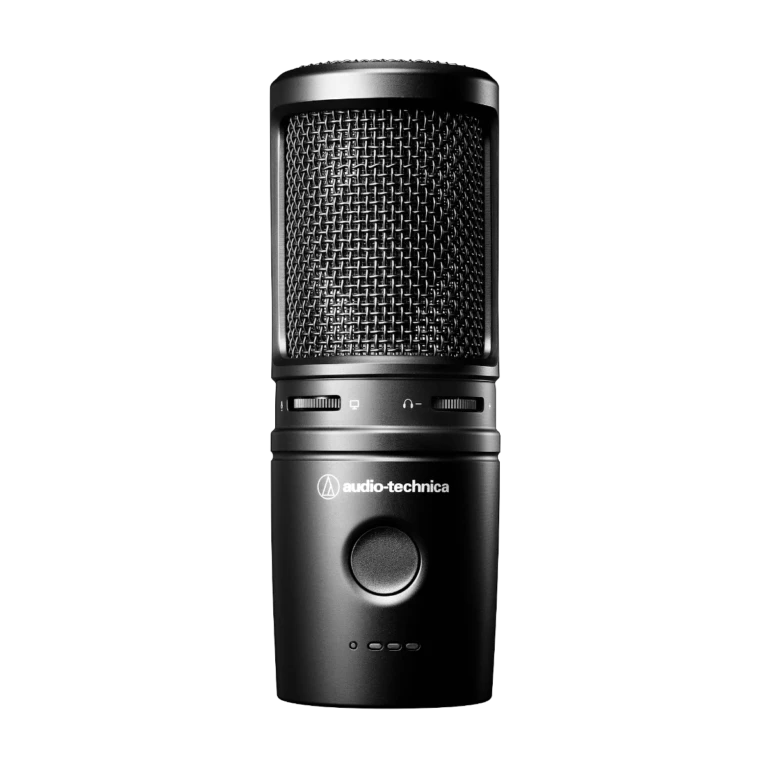 Audio-Technica AT2020USB-XP8.8/10
 Logitech G Yeti GX8.8/10Audio-Technica AT2020USB-XP vs Logitech G Yeti GX
- Audio-Technica AT2020USB-XP8.8/10
 Beyerdynamic FOX8.7/10Audio-Technica AT2020USB-XP vs Beyerdynamic FOX
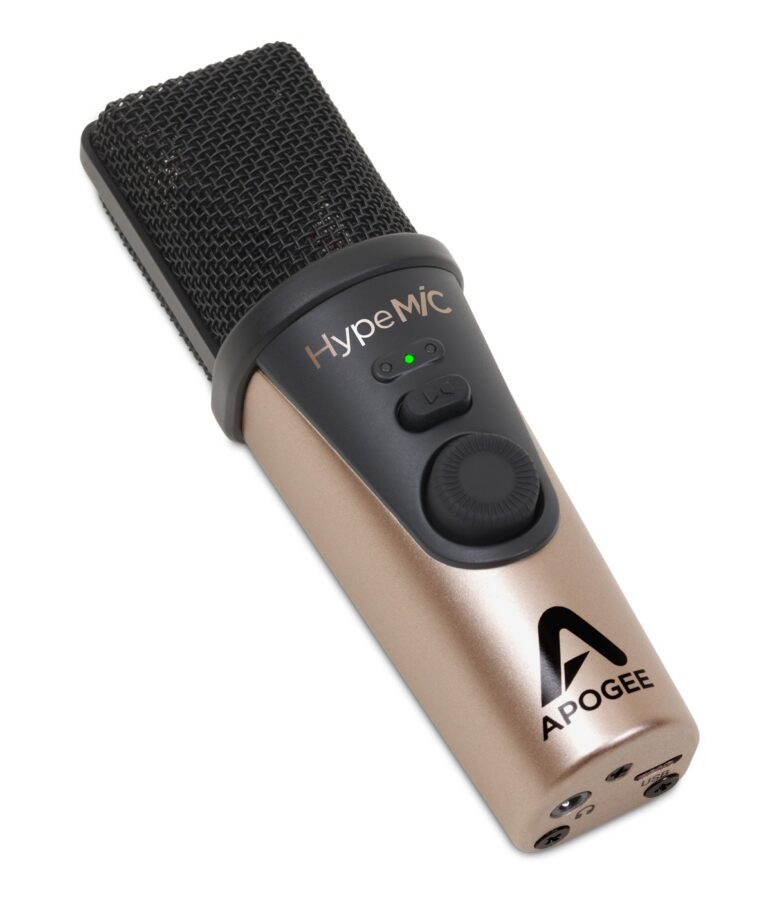 Apogee HypeMiC8.4/10Logitech G Yeti GX8.8/10Apogee HypeMiC vs Logitech G Yeti GX
- Audio-Technica AT2020USB-XP8.8/10
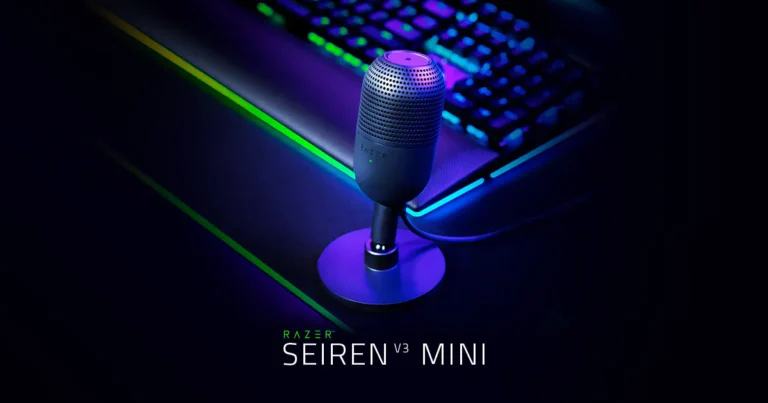 Razer Seiren V3 Mini8.4/10Audio-Technica AT2020USB-XP vs Razer Seiren V3 Mini
Quick Verdict
- Apogee HypeMiC 8.4Leads in Mounting & Shock
- Audio-Technica AT2020USB-XP 8.8Best overallLeads in Capsule Quality & Fidelity, On-Mic Hardware Controls, DSP Engine & Software