
Logitech G Yeti vs Sennheiser Profile USB Comparison
Compare Logitech G Yeti vs Sennheiser Profile USB side by side: specs, ratings, pros and cons, and which one fits your room best.
On this page
At a Glance
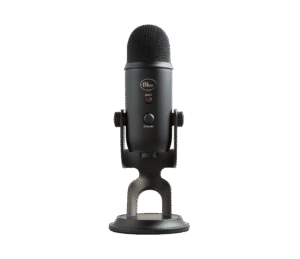
Want one USB mic with several pickup patterns for a fairly quiet room? The Logitech G Yeti is a USB condenser microphone with three 14 mm capsules, four pickup patterns, 16-bit / 48 kHz recording, on-mic gain and mute, a headphone jack and Blue VO!CE processing through G HUB.
- Best For
- Solo callers and small round-table recordings
- Microphone Type
- Condenser USB
- Launch Price
- $149.99
- Polar Pattern
- Cardioid, bidirectional, omnidirectional, stereo
- Sample Rate
- 48 kHz
- Headphone Monitoring
- 3.5 mm headphone output
- Mute Button
- Yes, with LED
- Connection
- USB
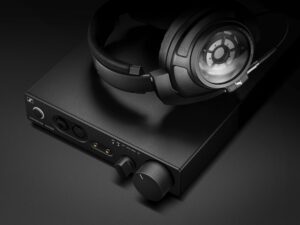
Want hardware controls on a USB condenser without installing software? The Sennheiser Profile USB is a cardioid condenser microphone with a KE 10 capsule, 24-bit / 48 kHz conversion, a tilting head on a sturdy desk stand, and front-panel gain, mix, mute and headphone controls.
- Best For
- Streamers and creators on calls
- Microphone Type
- Condenser USB
- Launch Price
- $159
- Polar Pattern
- Cardioid
- Sample Rate
- 44.1 / 48 kHz
- Headphone Monitoring
- 3.5 mm headphone output
- Mute Button
- Yes
- Connection
- USB-C
Review Scores Compared
Expert Score
Capsule Quality & Fidelity
Interface Versatility & Patterns
On-Mic Hardware Controls
DSP Engine & Software
Mounting & Shock
Editorial Reviews Comparison
Capsule Quality & Fidelity
- Logitech G Yeti7.0/10Leader
- Sennheiser Profile USB6.7/10
Logitech G Yeti
Logitech lists 16-bit / 48 kHz conversion, a 20 Hz to 20 kHz response and a 120 dB maximum SPL at 0.5% THD. The three 14 mm condenser capsules give the Yeti a bright, detailed character. Voices sound open and airy at about 15 to 20 cm, with more top-end sparkle than a typical dynamic.
Sennheiser Profile USB
The pre-polarised KE 10 condenser capsule captures audio at 24-bit and 48 kHz, with a 16-bit / 44.1 kHz option. Sennheiser tunes it for speech, with a gentle presence lift. Because there is no onboard EQ or compression, the sound you hear is the capsule.
Interface Versatility & Patterns
- Logitech G Yeti8.3/10Leader
- Sennheiser Profile USB7.7/10
Logitech G Yeti
A rear switch selects cardioid, bidirectional, omnidirectional or stereo. Cardioid is the mode for meetings, while bidirectional suits two people sitting across a table. Omni picks up a whole circle of speakers, which is handy for an impromptu group call around one laptop. Stereo adds width for music or ambient recordings but adds little to speech.
Sennheiser Profile USB
The cardioid pattern rejects sound from behind, but as a condenser it is more sensitive than a dynamic mic to the room around you. Position the mic so noise sources sit behind it, and keep it around 15 to 25 cm from your mouth. A dynamic mic such as the Shure MV7+ is better for loud spaces.
On-Mic Hardware Controls
- Logitech G Yeti9.7/10
- Sennheiser Profile USB9.7/10
Logitech G Yeti
On the front sit a mute button with a status light and a headphone volume dial. A gain dial on the rear sets sensitivity, and the 3.5 mm jack provides latency-free monitoring. A physical mute that works in any app is valuable in meetings. The light flashes red when muted, so a quick glance confirms whether your colleagues can hear you.
Sennheiser Profile USB
The front panel has a gain knob with a peak indicator ring, a mix knob for monitoring, headphone volume and a mute button. A 3.5 mm headphone jack sits at the back. The peak ring glows red if you speak too loudly, which makes setting gain easy before a call.
DSP Engine & Software
- Logitech G Yeti7.1/10
- Sennheiser Profile USB—
Logitech G Yeti
The Yeti uses Logitech G HUB for its companion software. Onboard DSP is listed as Blue VO!CE (via G HUB). The software or onboard controls also include EQ or presets (EQ in G HUB / Blue VO!CE), monitoring (3.5 mm headphone output), gain control (rear dial) and a limiter (Blue VO!CE limiter in G HUB).
Mounting & Shock
- Logitech G Yeti10.0/10
- Sennheiser Profile USB10.0/10
Logitech G Yeti
The mic alone weighs 550 g, and the metal desk stand adds about 1 kg. An internal shock mount isolates the capsule array from small knocks and desk vibration. The side-address design means you speak into the front, not the top. You can remove the stand and mount it on a boom arm, though its weight calls for a solid arm rather than a light clamp-on model.
Sennheiser Profile USB
The microphone weighs 350 g and sits on a weighted desk stand with a tilting head. A thread under the body allows boom arm mounting. The tilting head makes it easy to aim the capsule at your mouth without moving the stand. The stand itself is heavy enough to resist knocks and keyboard vibration better than most tripods.
Why Logitech G Yeti Beats Sennheiser Profile USB (and Vice Versa)
Why Logitech G Yeti beats Sennheiser Profile USB
- Better interface versatility & patterns: 8.3 vs 7.7 out of 10
- Frequency Response: 20 Hz to 20 kHz vs 20 to 20,000 Hz
- Sample Rate: 48 kHz vs 44.1 / 48 kHz
- Number of Patterns: 4 vs 1
Why Sennheiser Profile USB beats Logitech G Yeti
- Weight: 350 g vs 550 g (mic), 1 kg (stand)
- Capsule Size: KE 10 pre-polarised condenser vs Three 14 mm condenser capsules
- Max SPL: 125 dB vs 120 dB (0.5% THD)
- Phone / Tablet Support: Yes (Android 9+; iPadOS 14+ on USB-C Apple devices) vs No
Review-score leads of 0.5+ points out of 10 first, then specs where only one comes out ahead.
Full Specifications
General
| Logitech G Yeti | Sennheiser Profile USB | |
|---|---|---|
| Best For | Solo callers and small round-table recordings | Streamers and creators on calls |
| Release Year | 2009 | 2023 Better |
| Launch Price | $149.99 Better | $159 |
| Use Case | Calls, podcasts, streaming, interviews | Calls, streaming, podcasts |
| Weight | 550 g (mic), 1 kg (stand) | 350 g Better |
| Dimensions | — | 50 x 152 mm (microphone); table stand 98 x 18 mm |
| Colors | Blackout, Pink Dawn, White Mist | — |
| In the Box | Yeti microphone, desktop stand, USB cable | Microphone, desk stand, USB-C cable |
| Model Number | Yeti | Profile USB |
Capsule Quality & Fidelity
| Logitech G Yeti7.0/10 Better | Sennheiser Profile USB6.7/10 | |
|---|---|---|
| Transducer Type | Condenser (pressure gradient) | Condenser |
| Sample Rate | 48 kHz Better | 44.1 / 48 kHz |
| Bit Depth | 16-bit | 16 / 24-bit |
| Frequency Response | 20 Hz to 20 kHz Better | 20 to 20,000 Hz |
| Self-Noise | — | 28 dBA |
| Max SPL | 120 dB (0.5% THD) | 125 dB Better |
| Sensitivity | 4.5 mV/Pa (1 kHz) | -10 dBFS at 80 dB SPL (max gain); -50 dBFS at 80 dB SPL (min gain) |
| Microphone Type | Condenser USB | Condenser USB |
| Capsule Size | Three 14 mm condenser capsules | KE 10 pre-polarised condenser Better |
Interface Versatility & Patterns
| Logitech G Yeti8.3/10 Better | Sennheiser Profile USB7.7/10 | |
|---|---|---|
| Connection | USB | USB-C |
| XLR Output | No | No |
| Polar Pattern | Cardioid, bidirectional, omnidirectional, stereo | Cardioid |
| Number of Patterns | 4 Better | 1 |
| USB Connector | Mini USB | USB-C |
| Cable | USB cable included | USB-C to USB-C |
| Phantom Power | — | No (USB-C, 5 V, max 200 mA) |
| Wireless | No | — |
| Phone / Tablet Support | No | Yes (Android 9+; iPadOS 14+ on USB-C Apple devices) Better |
| OS Compatibility | Windows, macOS | Windows, macOS, iPadOS, Android |
| Works With | Logitech G HUB (Blue VO!CE) | Windows 10+, macOS 10.15+, iPadOS 14+, Android 9+ |
On-Mic Hardware Controls
| Logitech G Yeti9.7/10 | Sennheiser Profile USB9.7/10 | |
|---|---|---|
| Gain Control | Yes (rear dial) | Yes (with peak indicator) |
| Zero-Latency Monitoring | Yes | Yes |
| Touch Mute | Yes (instant mute button) | — |
| Headphone Monitoring | 3.5 mm headphone output | 3.5 mm headphone output |
| Mix Control | — | Yes |
| Headphone Volume | Yes | Yes |
| Lighting | — | Peak ring and mute light |
| Mute Button | Yes, with LED | Yes |
DSP Engine & Software
| Logitech G Yeti7.1/10 | Sennheiser Profile USB | |
|---|---|---|
| Onboard DSP | Blue VO!CE (via G HUB) | — |
| Software / DSP | Logitech G HUB | — |
| Limiter / Clip Guard | Yes (Blue VO!CE limiter in G HUB) | — |
| Presets / EQ | Yes (EQ in G HUB / Blue VO!CE) | — |
Mounting & Shock
| Logitech G Yeti10.0/10 | Sennheiser Profile USB10.0/10 | |
|---|---|---|
| Shock Mount | Internal | — |
| Mount Thread | — | 3/8 in and 5/8 in |
| Stand / Mount | Metal desk stand (included) | Weighted desk stand with tilting head |
| Boom Arm Compatible | Yes (stand removable) | Yes |
| Materials | — | Metal housing |
Takeaways
- Logitech G Yeti costs the least ($149.99), and Sennheiser Profile USB the most ($159).
- It's a tie on our rating (4/5) between Logitech G Yeti and Sennheiser Profile USB, so choose on the rows that matter most to you.
- Choose Logitech G Yeti for solo callers and small round-table recordings.
- Choose Sennheiser Profile USB for streamers and creators on calls.
Pros and Cons
Logitech G Yeti
PROS
- Four pickup patterns from one mic
- Simple plug-and-play USB setup
- Gain dial and mute button on the body
- Blue VO!CE filters via G HUB
CONS
- Large and heavy with the stand
- Condenser capsule hears room echo and keyboards
- 16-bit / 48 kHz is behind newer rivals
Sennheiser Profile USB
PROS
- Clear, natural condenser sound
- Gain, mix, mute and headphone controls
- Heavy stand with tilting head
- No software needed
CONS
- Hears more room than dynamic mics
- No onboard DSP or noise reduction
- Boom arm version costs more
Similar Comparisons
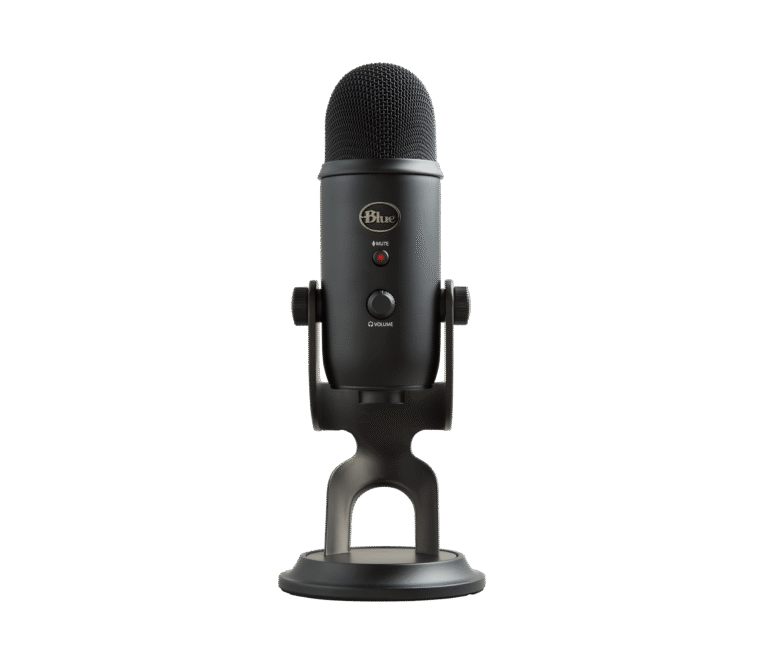 Logitech G Yeti8.0/10
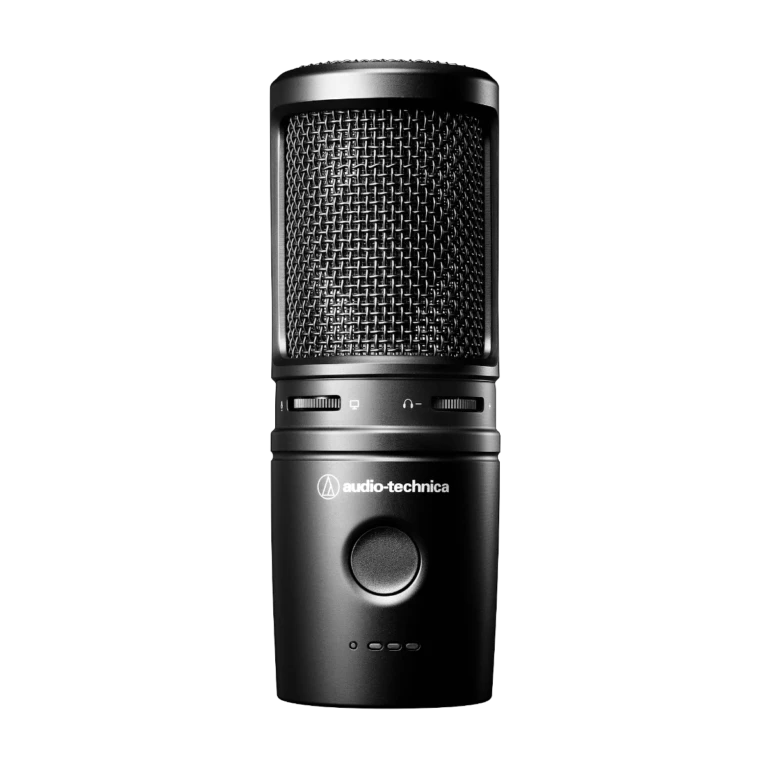 Audio-Technica AT2020USB-XP8.8/10Logitech G Yeti vs Audio-Technica AT2020USB-XP
- Logitech G Yeti8.0/10
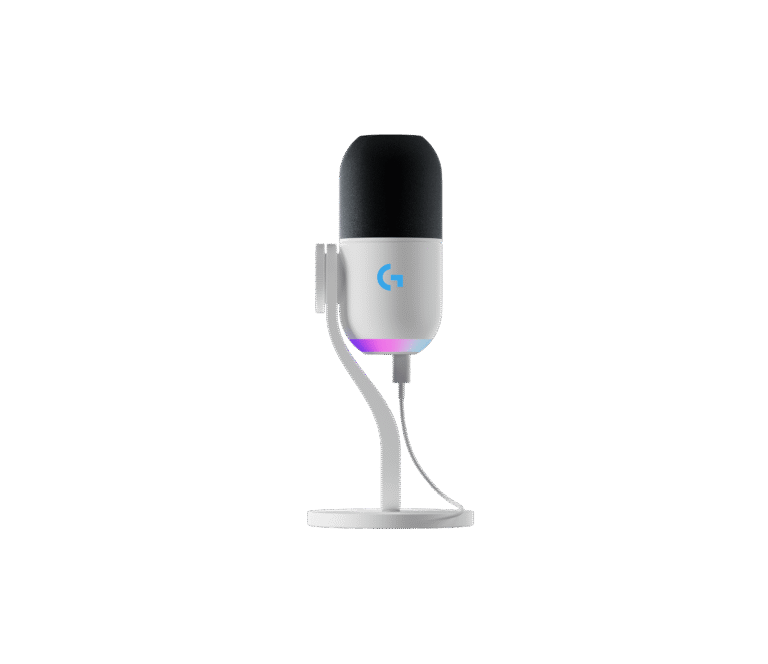 Logitech G Yeti GX8.8/10Logitech G Yeti vs Logitech G Yeti GX
 Sennheiser Profile USB7.9/10Audio-Technica AT2020USB-XP8.8/10Sennheiser Profile USB vs Audio-Technica AT2020USB-XP
- Sennheiser Profile USB7.9/10Logitech G Yeti GX8.8/10Sennheiser Profile USB vs Logitech G Yeti GX
Quick Verdict
- Logitech G Yeti 8.0Best overallLeads in Capsule Quality & Fidelity, Interface Versatility & Patterns
- Sennheiser Profile USB 7.9No outright category lead