

Over the last few years, virtual meetings have gone from a backup plan to the normal way many teams, schools, and businesses talk every day.
But the classic face-to-face meeting hasn’t gone anywhere. People still fly across the world to shake hands, run workshops, and close big deals.
So, which one should you use?
Is a video call really as good as sitting at the same table, or are we losing something important when we meet through a screen?
Don’t worry! In this guide, I’ll put virtual meetings vs. face-to-face meetings head to head on cost, time, engagement, relationship building, creativity, and productivity, using current research and real numbers.
You’ll also learn when each format makes sense and how hybrid meetings fit in between.
So, let’s get started.
What is a Virtual Meeting?
A virtual meeting is a meeting where people join from different places using video conferencing software like Zoom, Google Meet, or Microsoft Teams.
Everyone sees and hears each other through a computer, phone, or meeting room system, and they can share screens, chat, and record the session.

It can be a quick two-person call, a team stand-up, a class, or a large webinar. The only things you really need are a device, an internet connection, and the meeting link.
What is a Face-to-Face Meeting?
A face-to-face meeting (also called an in-person or physical meeting) is when everyone is in the same room at the same time. You can see facial expressions, posture, and small reactions, and the conversation flows naturally without lag or mute buttons.

This is how business worked for centuries, and it’s still the first choice for many important moments, like signing a contract, interviewing a senior hire, or planning a big project together.
Virtual Meetings vs. Face-to-Face Meetings: Quick Comparison
Key Differences Between Virtual and Face-to-Face Meetings
1. Cost
This is where virtual meetings win easily. Business travel is expensive, and it’s getting more expensive. The Global Business Travel Association expected global business travel spending to reach $1.57 trillion in 2025, with growth of about 8% forecast for 2026.
A video call, on the other hand, costs very little. Many teams already pay for Zoom, Teams, or Google Workspace, so one more meeting adds almost nothing. Even a good webcam and headset cost less than a single domestic flight.
Face-to-face meetings still make financial sense when the outcome is worth a lot, like closing a large deal or onboarding a key partner. The question to ask is simple: will meeting in person change the result enough to pay for the trip?
Let’s explore!
2. Time and Travel
A one-hour in-person meeting in another city can easily take a full day once you add the airport, traffic, and waiting. A one-hour video call takes one hour, and you can join from your desk, your home, or even a hotel room.
The downside is that easy meetings can pile up. Microsoft’s 2025 Work Trend Index found that meetings after 8 p.m. rose 16% year over year and that people are interrupted about every two minutes during the workday. In other words, virtual meetings save travel time, but you have to protect that time or it disappears into more calls.
3. Engagement and Attention
In a meeting room, it’s hard to check email without everyone noticing. On a video call, it’s very easy to turn the camera off and multitask. That’s why engagement often drops in larger online meetings.
Video calls are also more tiring. Researchers at Stanford explained four causes of “Zoom fatigue”: constant close-up eye contact, seeing yourself on screen all day, staying still in front of the camera, and working harder to read body language. I recommend shorter calls, hiding your self-view, and turning some meetings into audio-only walks.
Face-to-face meetings usually hold attention better, but they have their own problems, like long side conversations and one or two loud voices taking over the room.
4. Relationship Building and Trust
People build trust faster when they meet in person. A well-known study by Vanessa Bohns, summarized in Harvard Business Review, found that a face-to-face request was 34 times more likely to get a yes than an email. That study compared in-person asks with email, not video, but it shows how much being physically present still matters when you ask for help or commitment.
Video sits in the middle. It’s much better than email or chat because people can see your face and hear your tone, but small signals like a handshake, a shared coffee, or a quick chat after the meeting are hard to copy online.
That’s why many remote teams still plan in-person meetups a few times a year. The video calls keep work moving, and the meetups build the relationships that make those calls work.
5. Creativity and Brainstorming
This one surprised a lot of people. A 2022 study published in Nature tested pairs working in person and over video, in a lab and in a field experiment across five countries. The video pairs came up with fewer creative ideas because staring at a screen narrowed their focus.
However, when it came to choosing the best idea, the video groups did just as well as the in-person groups. So, if you need fresh ideas, get people in a room or use a shared whiteboard with cameras off for a while. If you need to evaluate options and decide, a virtual meeting works fine.
6. Productivity and Decision Making
For routine work, virtual meetings are often more productive. You can share your screen, edit the same document live, record the session, and get an AI summary with action items a minute after the call ends.
Face-to-face meetings shine for complex or emotional decisions, like restructuring a team or solving a conflict, where people need to read each other carefully. They also help when a topic needs a long, unplanned discussion that would feel awkward on a timed call.
7. Inclusion and Accessibility
Virtual meetings make it easier for people who can’t travel, like parents, people with disabilities, or colleagues in other countries, to take part. Features like live captions, recordings, and chat also help people who prefer to process information in writing. If you work with students, see our guide on the benefits of virtual meetings for students.
On the other hand, not everyone has a fast internet connection or a quiet place to join from. In-person meetings remove those tech barriers, but they can leave out anyone who can’t be in the room. We’ve also covered why virtual meetings can be bad for students, if you want the other side.
8. Environmental Impact
A life cycle study published in Nature Communications found that moving conferences from in-person to virtual can cut their carbon footprint by 94% and energy use by 90%. Hybrid conferences with carefully chosen local hubs cut the footprint by about two-thirds. For companies with climate goals, replacing even a few trips with video calls makes a real difference.
9. Security and Privacy
In-person meetings are naturally private if the room is closed, but there’s no record unless someone takes notes. Virtual meetings can be recorded and searched, which is useful, but they also need good security habits like passcodes, waiting rooms, and careful sharing of links.
When Should You Choose a Virtual Meeting?
I recommend a virtual meeting when:
- The meeting is short or routine: Daily stand-ups, weekly check-ins, and status updates.
- People are in different cities or time zones: The travel time would be longer than the meeting itself.
- You need to share screens or documents: Reviewing designs, reports, or code together.
- You want a recording: Training sessions, demos, and classes that people can watch later.
- The budget is tight: Small businesses, nonprofits, and students.
When Should You Choose a Face-to-Face Meeting?
A face-to-face meeting is worth the effort when:
- You’re meeting someone important for the first time: A new client, investor, or senior hire.
- The topic is sensitive: Performance problems, conflicts, layoffs, or personal news.
- You need big, creative ideas: Strategy workshops, product brainstorming, and planning days.
- The team needs to bond: Kickoffs, onboarding weeks, and yearly offsites.
- The deal is large: Negotiations where small reactions and trust really matter.
What About Hybrid Meetings?
Many teams don’t pick just one. According to Gallup, 52% of remote-capable employees in the U.S. worked hybrid in 2025, with 28% fully remote and 21% fully on-site. That means a lot of meetings have some people in the room and some people online.
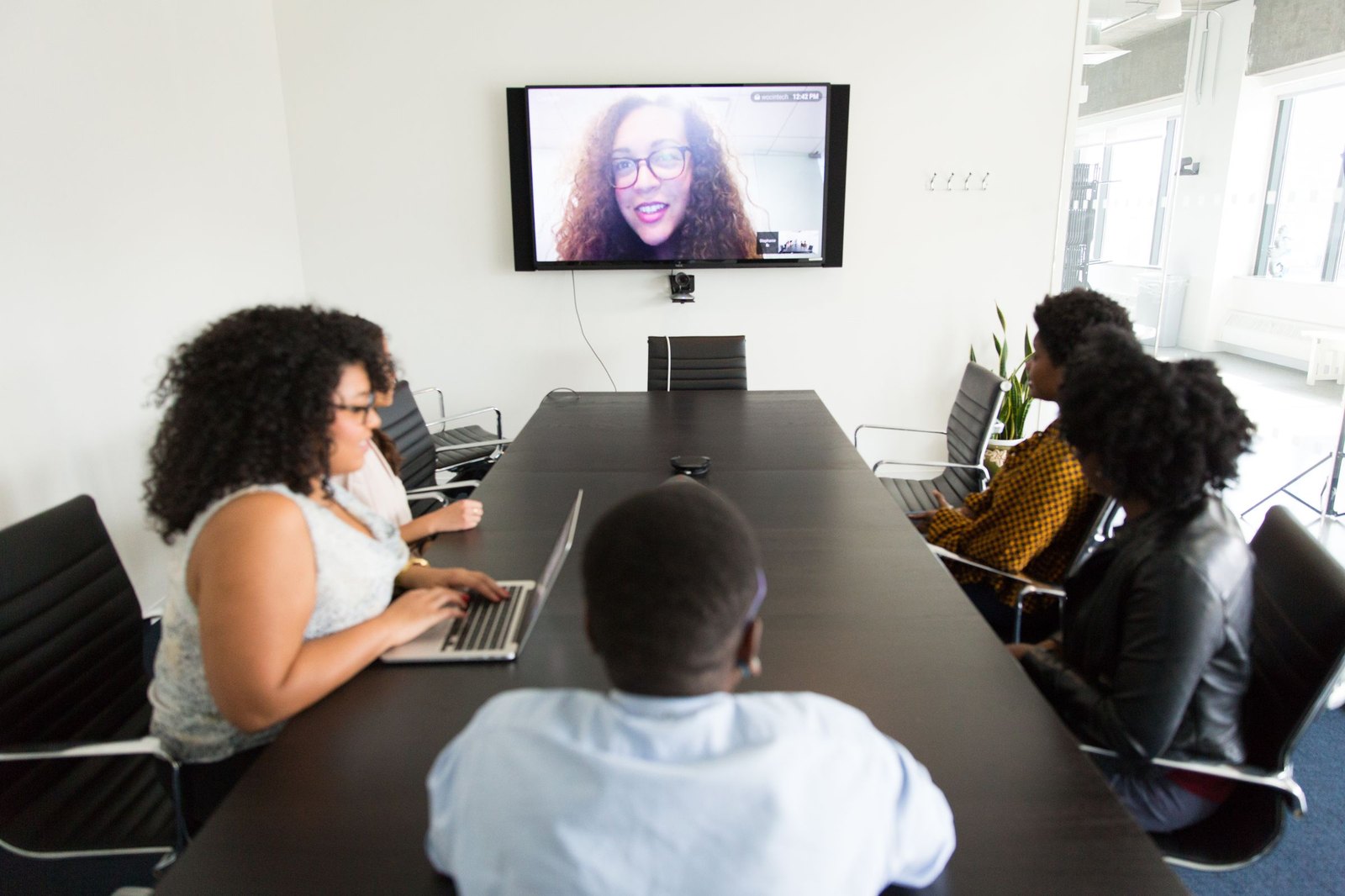
Hybrid meetings can give you the best of both formats, but only if the remote people can see and hear everything clearly. Otherwise, they quickly become second-class participants who can’t follow the side comments in the room.
Here are a few tips that work well:
- Use proper room equipment: A wide-angle camera or video bar and good microphones make a huge difference. See our all-in-one video bar guide and the video conferencing setup requirements.
- Have everyone join the chat: Even people in the room can open the meeting on their laptops (with audio off) to use chat, polls, and reactions.
- Assign a remote champion: One person in the room watches the screen and makes sure online people get a turn to speak.
- Share materials digitally: Put slides and documents on screen instead of handing out paper.
Which is a Better Choice: Virtual or Face-to-Face?
Honestly, neither format is better for everything. The best choice depends on the goal of the meeting. Here’s a simple way to decide:
| Meeting goal | Best format | Why |
|---|---|---|
| Quick update or stand-up | Virtual | Fast, cheap, and easy to join |
| Brainstorming new ideas | Face-to-face | More creative ideas in person |
| Choosing between options | Virtual or face-to-face | Both work well for decisions |
| First client meeting | Face-to-face | Builds trust faster |
| Training or class | Virtual or hybrid | Easy to record and replay |
| Sensitive conversation | Face-to-face | Full body language and privacy |
| Team across time zones | Virtual | No travel, flexible timing |
| Company offsite or kickoff | Face-to-face | Team bonding and energy |
A good rule of thumb: use virtual meetings for information and face-to-face meetings for connection. When you need both, go hybrid and invest in the right room setup.
Conclusion:
Hopefully, this guide has given you a clearer idea of how virtual meetings and face-to-face meetings compare in 2026.
Virtual meetings win on cost, time, flexibility, and environmental impact. Face-to-face meetings win on trust, creativity, and sensitive conversations. And hybrid meetings let you mix both, as long as everyone can see and hear each other clearly.
So, which format works best for your team?
Is it mostly virtual, mostly in-person, or a mix of both? Please let us know by commenting below and giving us a star rating to rate this post. And, if you have any questions or suggestions, feel free to contact us.
We’ll be happy to hear your thoughts, thanks.